Thursday, June 30, 2011

Fire in the Sky


While driving down an old logging road off the Arrowhead Trail one evening, I came across this opening that had a grouping of trees that stood out nicely against the sky. I was passing by right after the sun had gone down and the sky behind the trees was filled with this beautiful orange glow.

Monday, June 27, 2011

Soft Diet


Yesterday I had my wisdom teeth removed, and you know - the procedure was not at all bad. Kind of fascinating actually. But the aftermath is the difficult part. My head is splitting even with the painkiller cocktail I am taking, I feel weak and drowsy, and I can't ride a bike for the next few days. But the worst part is eating. For the next week I am supposed to transition from a cold liquid diet to a warm soft one, before I can have regular food again. It isn't easy to procure real meals with these restrictions, especially for a cyclist who is used to consuming lots of calories. For the first day or two the dentist suggested "yoghurt, ice cream and fruit juice," but that is way too much sugar. It occurred to me that with a blender I could liquify normal meals (salmon asparagus smoothie, anyone?), but I don't own one and didn't feel like buying one just to use for a few days. So instead I got some baby food, and it is surprisingly tasty. In a day or two I can graduate to mushed bananas and various soups.


Planning this diet is making me think more about eating during long, strenuous rides. I am not very good at minding my nutritional intake while cycling and have not yet figured out a system that works perfectly for me. For one thing, I simply don't feel hungry when riding strenuously, and I've learned that forcing down random food just to prevent bonking will only make me feel sick. Heavy and sweet foods, such as the pastries cyclists like to eat in cafes, make me nauseous. Dense crunchy things such as energy bars get stuck in my throat and then come back up no matter how hard I try to wash them down with water. Through trial and error, I've learned that I need to stick to soft foods that are easy to swallow, are not too sweet, and are nutritionally dense. Generous bites of a banana every now and again. V8 juice in one of my water bottles. And those soft chewy fruit cubes that are sold in health food stores. If I stick to foods like that, I can eat without breaking my stride and feel good.


Only problem is, those things are difficult to carry on the bike without making a mess, and it's also hard to get enough calories out of them on longer rides. Watching some of my riding partners squeeze gels into their mouths, take pills, and mix powders into their drinking water, I am beginning to understand why that sort of thing is done. Still, I am extremely reluctant to go that route and I am highly suspicious of nutritional supplements with mysterious, "scientifically-formulated" ingredients. Mostly that is because I have to be cautious with my diet for health reasons, and many of these supplement mixtures, even if they are "all natural," have ingredients that can affect hormone levels. I simply do not know what a large concentration of, say, soy or whey protein will do to my system, and I am reluctant to experiment. That is why I've been staring at, but still haven't opened this enormous bottle of electrolyte powder I've been sent to try. The last and only time I had an electrolyte drink, my high school tennis coach fed it to me and I promptly passed out. Understandably, I am reluctant to try one again.


A friend who is a runner and occasional cyclist recommended some soft chews and natural gels, which she says come the closest to feeling like eating normal food while keeping her energy levels stable. I bought a couple of samples, but haven't tried them yet.


I guess what I really want to hear is that even when doing long and strenuous rides I don't have to resort to any of that stuff, that there is some magical combination of regular foods I can make do with instead. Can one ride a randonnéeon bananas, V8 juice and peanut butter? Most serious cyclists I talk to think that's a terrible idea and believe scientifically-formulated nutritional supplements are a must. I am still deciding whether to take that plunge. But for now I will stick to the soft diet and will continue to be the girl with a mangled banana sticking out of her jersey pocket. Once I am back on the bike that is!

Thursday, June 23, 2011

Culverts, Press, and Poetry

Isn't this cool? Check out these very, very, large metal culverts right next to the road at Kautz Creek. Now try to imagine the road going OVER these culverts (they're supposed to handle future Kautz floods). BTW, this photo partially explains why the official word on the road to Longmire states, "probably [open] in early May." If you are wondering, there are less specific dates for Paradise. Also, news about the park reopening is gaining attention from the New York Times; they discussed strategies to fix the mess (but the story hasn't changed).

Recently, the Seattle Times waxed eloquently about the exclusivity of sleeping in the National Park Inn (NPI) at Longmire this winter. According to the author, visitors with highly coveted reservations at the lodge will be staying at

"one of the most exclusive hotels in the world, the 25-room National Park Inn... this is the only place for a traveler to sleep and enjoy indoor plumbing in the park's largely unpeopled wilderness."
The article goes on to slightly glorify the privilege, but this is not quite as exclusive as the paper might have you believe. As it turns out, climbers have been on the mountain too, a subtle revelation that is slowly spreading across the Puget Sound area. It all started when a few local pilots noted larger teams on the Muir Snowfield and at Camp Muir while zooming by the peak! Then there were rumors of guided clients who made it to Ingraham Flats... (Seattle IS a small town you know). So the word is out: those who booked trips with a concessioned guide service for this spring will be shuttled into the park like the visitors to the NPI at Longmire.

Post climbing ranger "employment:" On the creative writing front, our very good friend and poet, Mimi Allin, was buzzed by the Seattle Times and KIRO Radio. Mimi (former Camp Schurman climbing ranger) has been implicated as the Poetess at Green Lake! Those who walk, run, skip and/or bike around Green Lake may have laid eyes upon her little desk labeled P O E T (look for the red umbrella when it's raining). The desk (and Mimi) can be found every Sunday (since last July) on the NW corner of the lake from 9 to 5. At this very desk, Mimi channels artistic discussion around creative poet vortices (or something like that). Unlicensed and unpermitted, the Poetess at Green Lake has a poem for you..Techncial Sidebar: Mimi walks 4 miles each way to her post. She has only left early once, due to a snowstorm. If you're in Seattle, achieve a creative boost to your life by visiting with Ms. Mimi Allin.

Monday, June 20, 2011

Wool/Poly Blends for Cycling?

Sportwool, MerinoPerform

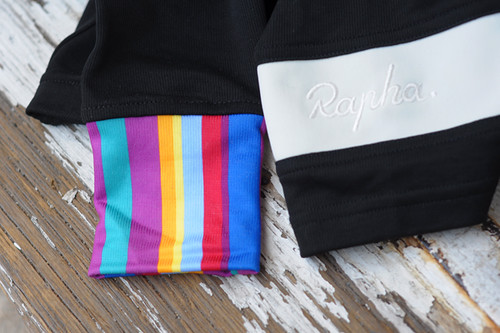
While merino wool has become a popular fabric choice for bicycle clothing, it seems that many manufacturers choose to use wool/polyester blends instead of pure merino, believing that the right combination can deliver the best results. Rapha and Road Holland use a fabric called SportWool. Shutt Velo Rapide usesMerinoPerform. Swobo refers to their blend as Merino 753. I am sure there are other proprietary names, but judging by the descriptions of these fabrics the idea is essentially the same: The blend is formulated to have wool fibers on the inside and polyester fibers on the outside, which the manufacturers believe delivers ideal performance properties.


Sportwool, MerinoPerform

Observing the way these blends have been marketed over the past couple of years, I've noticed an interesting dichotomy. The fiber content shows that merino comprises only 20-40% of it, whereas polyester comprises 60-80%. Yet the names of the blends inevitably feature the words "merino" and "wool," with no mention of the dominant synthetic content. To me this suggests that the manufacturers are eager to promote their use of wool given its current popularity, but in fact do not believe it is possible for wool to be a performance fabric - hence the idea that wool needs to be improved upon (by adding polyester) in order to be used in cycling clothing. All of this has made me highly skeptical about the wool/poly blends. But over the past few months I've had the opportunity to wear several garments made of these fabrics, and gave them an open-minded try. What follows are my impressions.


Sportwool, MerinoPerform

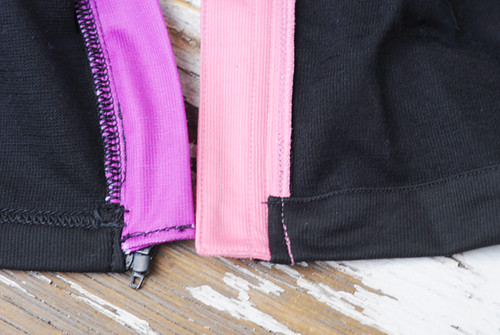
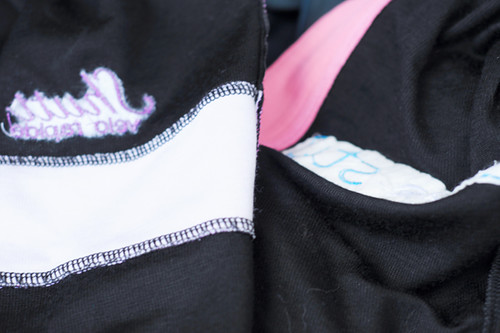
Having joined a local cycling club last December, I receivedtheir club jersey (right), which happens to be made by Rapha out of the aforementioned SportWool. A couple of months later, I received some items for review from Shutt Velo Rapide, including the Women's Training jersey (left), made of MerinoPerform. Both jerseys are 40% wool, 60% polyester. The texture and weight of the fabrics appear to be identical.


Sportwool, MerinoPerform

On the outside, the wool blend fabric is smooth and has a slight sheen to it.On the inside it is matte, soft and slightly textured. To the touch, neither the outside nor the inside feels like true merino, but the inside comes closer.


I have worn both jerseys over a (thin, 100% wool) base layer as well as directly next to my skin. I am sensitive to polyester was was curious whether this blend would engage that sensitivity.


Sportwool
In cooler weather, over a base layer, both jerseys feel pretty good. In fact, as mid/outer layers, I have to admit they regulate temperature better for me than the pure wool equivalents I own. I do not experience any sensitivity wearing either of these jerseys over a wool base layer.


However, worn directly next to skin I found the jerseys inferior to the pure wool alternatives. In warm weather the wool/poly blends do not breathe as well for me, and I feel clammy wearing them. I also find them less versatile for temperature regulation when worn on their own. On one ride I found myself too hot in the jersey at 85°F and too cold at the end of the ride at 65°F. I know that my long sleeve 100% wool jerseys are more versatile over the same temperature range.


MerinoPerform
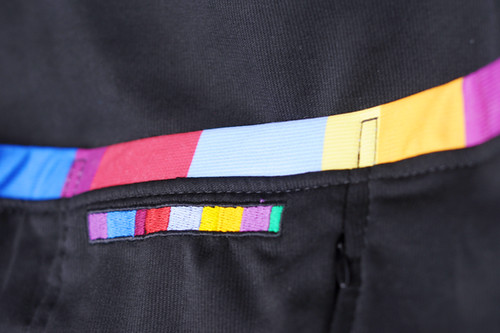
Rapha, Shutt Velo Rapide and Road Holland each offer lighter weight versions of their wool blend jerseys in an airy eyelet fabric. I've tried the one by Shutt Velo Rapide (above) and it did keep me cool in hot weather. The downside was that as soon as the temperature dropped a bit, I felt chilly. In my experience, pure wool is just more versatile in this respect.


As far as polyester sensitivity, I experienced it with the Rapha jersey when worn directly next to skin, but not with the Shutt Velo Rapide jerseys. I think the reason is simply that the former fits me tighter, so it comes into closer contact with my skin. Either way, after wearing the Rapha jersey in 80°F weather without a base layer underneath, I promptly got a rash under my arms. To be safe, I won't be wearing either of the wool blend jerseys without a base layer again.


MerinoPerform
Finally, some are probably wondering about the BO factor. Wool is well known for its odor-resistant properties, whereas polyester is known for quite the opposite. I found these jerseys to be somewhere in the middle in that respect, but closer to polyester.


In summary, I have learned that for me the wool/polyester blends function extremely well as outer and mid layers in cool to freezing temperatures. However, they do not function well for me when worn directly next to skin in warmer temperatures - both failing to provide the same temperature regulation as pure wool and activating my polyester sensitivity when coming into close contact with my body.


I am curious about others' experiences with wool/polyester blend fabrics from these and any other manufacturers. How do you find them for cycling compared to 100% wool or 100% synthetics?

Friday, June 17, 2011

Traveler


H
These are of Traveler playing and then standing to be brushed. Wish the background had been better on the one photo instead of having the trashcan in front of the garage in it. Tuffee is helping keep Trave under control in the one photo.

Acadia :: Carriage Roads and Bridges

From 1913 to 1940, John D. Rockefeller, Jr. was instrumental in constructing the beautiful carriage roads on Mount Desert Island, which would later become part of Acadia National Park. There are 45 miles of carriage roads (including 17 stone-faced bridges) available for walkers, bicyclists, equestrians and even carriages. In the winter, they can also be used for cross-country skiing.


The 'problem' with walking on the carriage roads is that the bridges are sometimes difficult to view. (This website has more photos of some of the bridges.)

It was easy walking along the carriage roads, even the uphill grades weren't too bad, and it was a pleasant way to spend the afternoon.


This bridge was at the southern end of Jordan Pond.


The roads and bridges were constructed
with manual labor. At times, there was a crew of 300 men working on
these roads.


Each of the bridges is different but
built to 'fit in' with the surroundings. This group of riders stopped
after we told them they were riding over a bridge. When you're on the
road it is sometimes difficult to know that you're on a bridge. Many
areas have the large stones bordering the roadway.


Another view of the same
bridge in the previous photo.


Some bridges, like this one, were
constructed with viewpoints that extended off to the side of the
road, which were nice so that you could actually see the bridge
itself.


This little bridge was
near the Bubble Pond.

Wednesday, June 15, 2011

Delicate Wonder


On our days off this week one of the places we visited was Cascade River State Park, where each year there are several stemless lady's slippers in bloom. These flowers are so beautiful and are an iconic subject of the north woods. We noticed that it is interesting how the "slipper" part of the flower hangs differently from the yellow lady's slipper. On the yellow slipper, the slipper sticks almost straight out and on the stemless slipper, it hangs almost straight down. Both flowers are incredibly beautiful and are a joy to find when you are out on the trail. We spent quite a while observing and taking photos of these flowers. Most photos I've seen show the flowers from the front but my favorite view of them was this angle from the side. I also love the blurry yellow clintonia in the background :-)

Friday, June 10, 2011

Sweet Gum Leaves


Bright red leaves of a sweet gum tree on December 2, 2006.

Your feet!


This is likely one of the most important blogs I will write on Cold Thistle.


I figure if you are reading this blog you are into climbing. All sorts of climbing, rock, ice and snow. That meansbeing out 12 months of the year on you feet besides just the climbing.


If you are like me, enough miles and you eventually get injured. Major or minor injuries have a way of adding up. Something I didn't really believe when i was 18 and now realise just how wrong I was on that myopic perspective.


"The human foot is one of the best-engineered parts of the body.


Each foot has 33 joints, eight arches, 26 bones, more than a hundred muscles, ligaments, and tendons that all work together to distribute body weight and allow movement. Unfortunately, many people pay no attention to their feet – until they start to hurt.


Foot disorders must be diagnosed and treated early, before they become very painful and incapacitating. In some cases, some painful foot abnormalities are already warning signs of even more serious ailments such as diabetes, circulatory disorders, and nerve problems. Do a self-check while it’s early.."


It looks like this pair of feetwill be loosing 5 out of 10 toe nails. Likely the result of a combination of running andclimbing abuse?


Few things will really slow you down in the mountains. Knees will. But everyone who has had a bad blister on their foot will acknowledge just how disabled you can be when you feet start hurting.


Staying mobile will keep you climbing in one fashion or another. There are other joints that will slow you down but the ones that seem to most easily effect us are the feet, and knees.


If you look the first set of feetwith the taped toe, picturedabove with the title, the thing most obvious is the over size joint at the ball of the foot, base of the big toe. It is called a Bunion.Sad as it seems , your feetchange over time and generally get bigger. Bunions can behereditary, but for climbers it can exacerbatedbyabuse of long walks, tight rock shoes, or rigid soled boots.


I replaced several pairs of perfectly good winter boots last year for just those reasons. Capsulitis of the second toe, Hallux Abducto Valgus (bunions) and a few other issues of simply wear, tear and age means bigger boots and prescription orthotics to slow the progression.If left unattended you will end up with some seriously damaged feet and a long termloss of mobility. Below is a good sized bunion on the left footand hammer toes on the right foot..


Here is a look at just a few of the common foot issues climbers (or anyone might) have. Do your self a favor and take a look at your own feet. Address the issues sooner than later.


"Plantar Fasciitis When there is increased stress on the arch, microscopic tears can occur within the plantar fascia, usually at its attachment on the heel. This results in inflammation and pain with standing and walking and sometimes at rest. It usually causes pain and stiffness on the bottom of your heel.

Bunion


An enlargement on the side of the foot near the base of the big toe (hallux). The enlargement is made up of a bursa (fluid filled sac) under the skin. The term bunion is also commonly used to describe a structural (bony) deformity called hallux abducto valgus (HAV). Bunions can be painful and can be aggravated by activity and wearing tight shoes.


Neuroma


In the foot, a neuroma is a nerve that becomes irritated and swells up. If the nerve stays irritated, it can become thickened which makes the nerve larger and causes more irritation. Pain from a neuroma is usually felt on the ball of your foot.


Corns & Callouses


Corns and callouses are areas of thick, hard skin. They usually develop due to rubbing or irritation over a boney prominence. The hard, thick skin is called a corn if it is on your toe and it is called a callous if it is somewhere else on your foot.


Toenail Fungus (onychomycosis)


Fungi like a warm, moist and dark environment (like inside a shoe). A fungal infection in your toenails may cause the nails to become discolored, thickened, crumbly or loose. There are different causes and it is difficult to treat due to the hardness of the toenail.


Ingrown Toenail (onychocryptosis)


An ingrown toenail can occur for various reasons. The sides or corners of the toenail usually curve down and put pressure on the skin. Sometimes the toenail pierces the skin and then continues to grow into the skin. This may cause redness, swelling, pain and sometimes infection.


Hammer Toes


A hammer toe is also sometimes referred to as a claw toe or mallet toe. It involves a deformity of the toe where there is an imbalance in the pull of the tendons. Either the tendon on top of the toe pulls harder or the tendon on the bottom of the toe pulls harder. This results in a curling up of the toe.


Plantar Warts (plantar verucca)


Plantar warts are caused by a virus. Plantar means bottom of the foot, but warts can occur other places on the foot and toes as well. Plantar warts can be painful depending on where they are located. Sometimes they are mistaken for callouses because layers of hard skin can build up on top of the wart.


Flat Feet (pes planus)


Just because you have flat feet does not mean you will have problems or pain. If you do have pain, there are various treatment options available. If you only have one foot that has a flat arch, it may be due to another problem and you should get it checked out.


Athlete's Foot (tinea pedis)


Athlete's foot is a common skin condition that can affect everyone, not just athletes. It is caused by a fungus. It may cause redness, itchiness, tiny bumps filled with fluid or peeling skin. It is most commonly located between the toes or on the bottom of the feet.


Achilles Tendonitis


Achilles tendonitis involves inflammation of the Achilles tendon. If the tendon stays inflamed long enough, it can lead to thickening of the tendon. Sometimes nodules or bumps can form in the tendon. Achilles tendonitis can become a long term problem or can lead to rupture of the tendon."


Capsulitis of the second toe, (or any toe)


Hallux Abducto Valgus (bunions), hammer toe, onychocryptosis, and Plantar Fasciitis haveall plague this pair of feet. Much of the damageis a given from hereditary. But much of the damage could have been mitigated by the use of a prescription orthotic early on ( or even a well fitted off the shelf orthodic)and more carefully picking the approach and climbing footwear to be used.

Foot injuries and broken bones from martial arts,accidents,cold injurieswhile working, skiing and climbing,the use of overly tight rock shoes, and rigid soled alpine boots alladd to the long term damage. And slow recovery. But as much as anything your genes, your heredity, will have much to do with how your feet fair over time. That is luck of the draw. A good Podiatrist may be able to limit the damage or fix what you have been given.

More here on what to look for and avoid:

http://www.webmd.com/skin-problems-and-treatments/slideshow-common-foot-problems


Mountain boots?


I think there should be much more concern with several issues on mtn boots. Firstis the low quality generally worthless, insoles boots are delivered with today. I have $700 and $1000 production boots that come with insoles that sell for less than .10 cents a pair. Come on!

The other concern in recent boots is a super rigid sole and a very flexible ankle. Our feet don't work that way. You are bound to have feet issues with a bad insole and a dead rigid sole.

Mountain Snowpack Begins to Build Again

The recent storms have brought almost 40" of fresh snow to the mountain and more is expected in the near future. While this bodes well for the upcoming climbing season, the inclement weather does nothing to help with the road reconstruction effort underway. Still, the forecasted reopen dates remain in effect: April 1st for the opening to Longmire and May 1st for the opening of the road to Paradise. Unfortunately, with road reconstruction in full swing, there really isn't public access to Paradise... Even if you have the energy and determination to ski or hike the road. More on Access

Over the weekend rangers climbed to Camp Muir to inspect conditions and dig out facilities. I've included several photos here from this trip to whet your appetite.
While things are quiet here at the Park, this might be a good time to get a jump on things and purchase your 2007 climbing pass and cut down on the time you will spend during registration. Complete the Climbing Pass Purchase Form and fax it to 360.569.3131.

Tuesday, June 7, 2011

Firefighter


The firefighter is probably the largest of the wooden sculptures in the little park at the Pueblo Montano Trailhead. The sculptures were made byMark Chavez, who was one of the firefighters who fought the Albuquerque Bosque Fire of ... I have seen a lot of things made from wood using chainsaws (mostly bears) but the sculptures in the park are really unique. The tell the story of the fire, and the wildlife that live in the Bosque. The Bosque is the nature trails and native lands that border the Rio Grande River where it runs through Albuquerque, NM. During the fire many of the beautiful cottonwood trees along this section of the river were killed. Instead of cutting down the dead trees to use them as firewood or hauling them to the dump Mark Chavez turned these tree stumps into fanstatic sculptures. More information at http://www.examiner.com/x-1972-Albuquerque-Travel-Examiner~y..m9d10-Hidden-Albuquerque-Pueblo-Montano-park-and-the-wood-carvings-of-Mark-Chavez

Northward Bound

Tuesday, April 19th - - After four lovely days of visiting friends in northeast Louisiana, I headed north on Sunday morning (April 17th). My goal was to get back to Indiana without traveling on Interstate Highways at all and to avoid four-lane highways as much as possible. That I have done thus far but I'm only halfway there!


I stopped at the Civil War Interpretive Center in Corinth yesterday (a post is forthcoming on that visit). Last night I stayed at this beautiful State Park in Mississippi – the Natchez Trace Parkway runs through it – and got on the Parkway this morning.


My campsite alongside the lake at Tishomingo State Park in northeast Mississippi.


The sun had been hidden by heavy clouds all day but showed itself for a few minutes late in the evening.


I just love the “green” all around. Delightful. And easy on the eyes.

Wisconsin Dells Fifty Years Ago


Postcards. On the left is "Swallows' Nests, Wisconsin Dells. In the summer hundreds of swallows make their homes in holes in the sandstone cliff." And, at right is "Motor Launch on the Wisconsin River."

In a previous post I mentioned that my grandpa Vic and Aunt Shirley Phend had taken my brothers and me on a trip to the Wisconsin Dells. That was fifty years ago this week and it made the "gossip" column of the local newspaper! I'm not sure why they decided to take us along, Mom says they asked us to go simply because they thought we would enjoy the trip. We did, though now the details are a bit fuzzy. I think we were the only ones they ever took on a trip with them. I wonder if we were that ornery that they were put off doing it again? Mom did say that grandpa told her that he had to threaten us a few times to settle us down but that overall 'we were pretty good kids' so maybe they just never took another trip together. I do remember that us kids usually got along well, especially Jack and me, and that Doug was the instigator of many of the things that got us in trouble over the years. Of course, I would never start anything ;-)

In July 1957, Jack was the youngest and would turn 8 years old on the 8th of July. Doug had turned 10 in March, and I was 9 years old.

As with many of my later trips, I kept a record, sort of, of the towns we passed through. I just love the spelling of some of them. . .


The postcard below was written to my aunt Pat, one of Mom's sisters, but was apparently never mailed. That's not my signature, my Mother wrote my name in later. It says: "Dear Pat,We got to wisconson at 6:30. We went threw 31 towns. It took us 9 and a half hours to get there. It took us 350 miles to get there. How are all of you. I am fine. We went sight seeing and we went on a boat ride and we saw some Indinas."
My sister was only three years old at the time, so she didn't get to go along. This card was sent to her: "Dear Terry, I am fine. How are you. We are going to see some Indians tomorrow and we are going to take a boat ride.From Becky and Jacky.