Tuesday, March 31, 2009

Cumberland Island :: Dungeness

The morning of Sunday, December 27, .. was another chilly, gray, gloomy, overcast morning; the same as the three previous mornings. I had been hoping for at least a little sunshine and a slightly warmer day but, based on its beginnings, I didn't think that was going to happen. Saturday I had gone to St. Marys to check out the town and find out about the ferry going to Cumberland Island National Seashore. Good thing I did, as reservations are recommended!

So the reservations were made, but not paid. I could still decide not to go. However, I figured with the way the weather had been, it was as good a day as any!

After a short drive into St. Marys, then paying the fees ($17 for the ferry and $8 for the National Park Entrance, the latter was covered by my wonderful National Parks Pass), and listening to a short orientation lecture, I boarded the ferry with the other passengers. I was amazed by the number of people with camping gear, it seemed like about half the people on-board were campers. The campsites on the island are primitive. The only facilities available are showers and restrooms and those only in the main campground areas. You're completely on your own in the backcountry. Whether they are staying in the campground or backcountry, everything that is needed by the camper has to be brought in by them and anything they bring in has to leave with them. I'm not quite prepared, yet, for that kind of camping, especially when the temperatures dip down below the 30s overnight!

There was a heated cabin area on the ferry where some passengers sat during the 45 minute ride out to the island but many, myself included, opted to sit outside in the cool morning air. Refreshing is how some might have described it. Most of the day-trippers like myself disembarked at the Dungeness Dock on the south end of the island while the rest went on to the Sea Camp Dock a mile to the north, where it was a short trek to the campground.

In order to learn a little about the history of the island and its inhabitants, I opted to take the Ranger Guided Tour of the Dungeness Trail. I've since found several websites that give more detailed information and they have added considerably to what I learned that day. Links to those websites will be listed at the end of this post. The Ranger who gave the tour was very knowledgeable and entertaining as well.

The Dungeness Trail leads you to the Dungeness Mansion, or rather, to the ruins of the second Dungeness Mansion. The first Mansion, four-stories high and huge, was begun in 1796 by the widow of Revolutionary War General Nathanael Greene and her second husband, Phineas Miller. The mansion was completed in 1803. Shortly thereafter Dungeness became a mecca for the early Georgian high society. After the Civil War the Mansion was not maintained. It fell into disrepair and in 1866 burned to the ground.

About 1880-81 Thomas Carnegie (a brother and partner of Andrew Carnegie) purchased much of Cumberland Island. With his wife, Lucy, Thomas built the second Dungeness Mansion where the first had been. It was a 59 room Scottish-style castle complete with turrets, a pool house, 40 outbuildings, a golf course, and acres of manicured gardens. Thomas Carnegie died in 1886 leaving his wife Lucy with nine children. Over the years, four other mansions were built further north on the Island for use by the children. The house at Plum Orchard has been restored and is open for tours twice a month. It happened to be open the day I was there but I chose to explore the southern end of the Island rather than view the house.

The second Dungeness was used through 1929 then it sat vacant for 30 years. In 1959, it too burned to the ground. All that remains of that magnificent mansion are a few walls, standing like sentinels, guarding the past. Some day, they too will fall.

Left side of the Dungeness Ruins, from the front.

Dungeness Ruins from the front-left corner.

Dungeness Ruins from the rear-left corner.

Dungeness Ruins. Window detail.

The remains of the recreation building.

The Tabby house, which stands off to the right side of the Dungeness Ruins is the oldest house on the Island. Tabby is a kind of concrete made of oyster shells, lime and sand. Built around 1800, it dates from the time of the first Dungeness Mansion. It was the only building in the area that was spared by the Carnegie's when they built the second Dungeness.

To be continued...

See these websites for more information on the history of Cumberland Island and the National Seashore:
  • National Park Service
  • Outdoor Places
  • CNN Article (Posted in 1998, but still valid.)
  • Wikipedia

Monday, March 30, 2009

A Night in the City


A Night in the City, originally uploaded by ParsecTraveller.

A few friends and I drove up from San Luis Obispo to San Francisco for Friday night and Saturday. Most definitely an awesome trip. This is the view last night from Conzelman Road in the Marin Headlands - those lights on the otherwise dark hillside are car headlights.

Saturday, March 28, 2009

Jacob Wise - Nashville Cemetery

Jacob Wise, one of my civil war ancestors, is buried in Section "J" at the National Cemetery in Nashville, Tennessee. I had planned on posting these pictures with my previous post on him and his family, but sometimes life gets in the way of good intentions!

The first two photos were taken in the summer of 1928 and are from my grandmother's files. Shown in the photo on the left are Grace Zinsmeister, Maude Wise Brubaker Yontz, Rose Wise Zinsmeister, and (a very faded) Hazlette Wise Burns. Rose, the youngest daughter of Jacob, whom he never saw, was born two weeks after he was drafted in October 1864. Grace, Maude and Hazlette are Jacob's granddaughters.

The photo on the left, below, is one that I took several years ago. On the right is the gravemarker that was put up at the time of the death of his wife in 1901. The stone is in Hively's Corner, now St. Matthew's Church, cemetery in Thorncreek Township, Whitley County, Indiana. The date of Jacob's death on the stone in not correct. The widow's pension records show that he died on May 17, 1865 not on May 7th.

Friday, March 27, 2009

The Amazing Bloomin' Cactus

This Christmas Cactus was given to me six years ago when it was about 6 inches high. Now it is 24 inches across and the highest branch is 15 inches high; the pot is 7 inches high. The first half dozen flowers bloomed last weekend. I counted 20 full blooms, 6 more ready to bloom, 10 medium sized buds and more than 50 small buds just coming on. It is incredibly beautiful, the pictures in no way do it justice but I just had to share. The most blooms that have ever been on it at the same time has been six. Has anyone ever seen a Christmas Cactus with so many flowers?


Leavenworth Ice ..

Jennifer was supposed to work Christmas and Christmas Eve, so I was trying to find something to do. I successfully wrangled Ryan and Dylan to be followers and climb an ice line up Icicle Canyon. I was hoping that the recent warm weather didn't destroy it, and we would be rewarded with an early Christmas present to ourselves.

We took a casual start and arrived in Leavenworth around 10am. The beauty of this route is the "ten minute" approach. So we readied ourselves at the car and hiked into the woods. The route was easy to find having done the trail to Condor Buttress earlier this year.

The route in Spring

Within ten minutes of hiking we were at the first step of the route. Since it was a bit steep, we opted to hike past it and start at the second step. So we roped up and started with the second step. The second step had an easier line on the right, and a steeper line on the left. Since it was the first lead of the day, and I wasn't sure how strong the ice was, we kept to the right side. After the step there was quite a bit of flat stream so I set a belay and brought Dylan up who then brought Ryan up. We unroped and hiked up the stream bed a distance before reaching the next step. While this step was a solid WI2, it was short and we decided to solo it as we knew there was more hiking above it.

While the climbing so far was generally easy, the ice conditions were quite variable. As I suspected, the wet warm trend from earlier in the week left the ice poorly bonded to the rock in some areas. A section of the first step had a hollow 3' square area surrounded by well bonded ice. This next step that also had areas of poor ice as well, but fortunately I used the pick holes from a soloist (who had passed us) so as not to damage the ice further when I went up.

Some more hiking through a now brushy and less open creek bed got us to the next step. This is where the real climbing starts. From the base of this next step, I thought I could make it to the base of the final step in one rope length. But once at the top of this step, there was a little more distance before another penultimate step. So I led to the base of that step and brought the guys up. I then led out on the penultimate step which was really fun. There was a bit of snow on the ice and there were some hollow sections, but I was able to sink screws in it fairly well including a 19 cm screw. Once at the top of that step I was in the basin below the final step and proceeded to the ice to build an anchor. Unfortunately, the ice on the final step was thin and I couldn't sink screws well. (I was out of shorties.) I had to use 21cm screws not fully sunk as the anchor.

I brought Ryan up and he belayed Dylan up. We discussed the final pitch when we were met with another soloist. We chatted with him a bit. (Turns out the other soloist was his buddy.) And then we let him go ahead of us. The left side of the final step starts with about 12' of 85° ice. It has been climbed as it had pick marks. The right side had also been climbed usually on the far right. I decided to take something right up the middle where I knew there would be pro (wrong) and it was a bit steeper than the right side.

I started up heading toward an icy rib that looked like it offered good protection. Unfortunately, it would not take a screw all the way and I had to tie it off. The stance also was not great for placing the screw and I really worked my calves while placing it. Just past the screw the ice was tympanic and did not feel comfortable, but this passed. A little further up and I found a rest stance, so I placed another screw in shallow ice. My calves were really getting worked and I decided instead of heading a bit to my left for a short step, that it was time to head straight for the top. I worked quickly and methodically through the final bit of the pitch and was on flat ground heading for a large Ponderosa. Once there, I made it my anchor and brought Dylan up. He belayed Ryan up while I sought out the descent or a possible continuation.

Most parties stop where we did and descend. This is the option we choose after the bits of ice above our location didn't seem to offer any great climbing (that we could do.) So we headed down, following the trail of footprints in the snow. Most of the descent was fine to do in bare boots, but there were a few icy sections that would have been nice to do in crampons. Not sure it would have benefited to leave them on the whole descent, but Ryan did and he didn't complain.

This was fun route, but the climbing really starts farther up and the first few steps are warm ups. Due to the short approach and the length of the non technical portions, it is an easy day trip. (Car to car for us was around six hours.) The ice wasn't in the best condition, and was hacked out in a few places as well. (Very different from how we found The Goatee.) The climbing on the upper three pitches was great, and I'd go back to do this again.

My pics are here.
(Dylan took pics, but I haven't seen them.)

Thursday, March 26, 2009

Far Out in the Nears: The Main Line (5.8), Mac-Reppy (5.8 A0), Up In Arms (5.9) & More!


(Photo: Gail showing off a little Moxie (5.9), approaching the good moves before the crux.)


This past Saturday was a fine day in the Gunks. A little warm (high 80's), but sunny. Gail and I expected the place to be a madhouse. So we decided to avoid the crowds by heading to the far side of the Near Trapps. Back in April, Gail and I had great fun in the Easter Time Too area, but we barely scratched the surface. We knew there were a ton of good climbs out there neither of us had tried before.


I hadn't been to the Gunks in a month. Although I'd had the great fortune to climb for four days in a row at the end of May/beginning of June in Squamish, by Saturday that trip seemed like ancient history. I was afraid I'd feel rusty in the Gunks. As we trooped out to the end of the Nears I suggested we start with a route that was somewhat familiar to me: The Main Line (5.8).


Gail has been leading a lot lately and I thought the second pitch of The Main Line would be good for her. She loves roofs and the Main Line roof crux, while burly, is short. I remembered the pro as rock solid. When I led this pitch two years ago I thought the pro was great.


On that day, back in , I was climbing with Vass. I'd hoped to do the whole route but the first pitch of The Main Line was wet. We did the 5.8 first pitch of Ground Control, just to the right, instead. This pitch meets pitch one of The Main Line at its end, finishing at the same set of bolts. I didn't care for the first pitch of Ground Control; I found it awkward and not that much fun. But I loved the second pitch of The Main Line. And then our day came to an abrupt halt. After rapping back to the bolts, I started the second pitch of Ground Control (which is 5.9), but took a lead fall off of some wet holds and sprained a finger, ending our day early.


So on this past Saturday I thought Gail and I could knock off both pitches of The Main Line. I'd lead pitch one, and then Gail could tackle pitch two. And then maybe I'd get back on the second pitch of Ground Control and take care of that one as well.


When we got to The Main Line its corner it was dry so we did it.


I liked pitch one. It is rated 5.7 and I think that is fair. It has several nice, tricky moves on it. It ascends a left-facing corner. When the corner ends at a roof you step right to a slab, then move up to another left-facing corner, which leads you to the belay ledge with a bolted anchor. The larger, second corner is the crux of the pitch but it isn't a corner climb. The crux is getting to the good holds to the left of the corner.


I found the pro to be a little thin on pitch one. It wasn't a crisis, but at the cruxy moments I was often a bit above the gear. I couldn't get a piece right where I wanted it. If 5.7 is your leading limit this pitch might be a bit scary for you.


As we looked up at pitch two Gail wasn't really feeling like leading it. The roof is very intimidating. I'd been there before and thought I knew what to expect so I took the lead again. And the climbing went fine. This is an amazing pitch, with a steep, pumpy stance right beneath the huge overhang, and then one reachy 5.8 move to a jug and easier but still steep climbing up and right to the finish.


Although the climbing was no problem, the pro at the crux gave me fits. I remembered this great placement for a yellow Number 2 Camalot. Two years ago I got this odd but bomber placement right in the middle of the irregular pod above the lip of the roof. But not this time. I couldn't make it work. I tried over and over again. It drove me crazy, and I started to pump out. Eventually my leg started shaking like mad as I tried to force the yellow cam to fit. But it wouldn't go and Gail suggested I step down to rest.


I needed something there. I was confident in the move but the pro below the roof is several feet down and the fall down to the slab would be ugly if you blew it with only that lower piece for protection.


Finally I gave up on the yellow Camalot and got an Alien in one of the cracks on the side of the pod. I thought the piece was okay. It was going to have to do. I did the moves and finished the pitch, which was just as awesome as I remembered. But then when it was her turn Gail struggled with the crux move and when I pulled up on the rope, she was yanked sideways because she'd removed the cam from the pod and my next piece was up and to the right. She couldn't get the angle on the jug, ended up hanging and then couldn't get back on the rock. I lowered her to the belay and had to rap to her. She never got to do the pitch! I felt terrible. Next time I'll place another piece directly above the crux move.


When I rapped down to Gail the annoyances continued. I managed to feed the rope into a notch, getting it stuck. I had to traverse to the right from the bolts until I could yank it free.


It was turning into one of those days.


Back at the bolts, I took a look up at the second pitch of Ground Control. I wanted to do it, but I was already hot, sweaty, and dehydrated. I felt kind of worked over after what was supposed to be our warm-up climb! It seemed like we should go down, have a drink, and find something else.


We ended up doing a lot of fun climbing during the rest of our day, but after our little fiasco on The Main Line I never did feel like I was climbing my best.


We decided next to hit Mac-Reppy (5.11c), which is just left of The Main Line. I was not expecting to get the onsight. 5.11c is just a bit above my pay grade, so to speak. But the crux is one super-hard move at a huge roof, and the rest of the climb has a reputation for being a great 5.8, with a good upper crux involving stemming a corner to get around another huge roof.


I ended up aiding the 5.11 crux. There is a bunch of stiff, faded slings hanging at the crux roof and I imagine many folks bail from there when they get shut down. This station could use some new slings; I would not have felt comfortable using the stuff that is there, as it is pretty junky. But there's no need to bail, people! You can aid the hard bit and the rest of the climb is really nice.


I made a few token efforts at the move. I placed a bomber big nut in the side-pull above the roof and tried to figure out how on earth I would get my feet up into the corner. There is a jug wayyyyyy up there if you can figure out how to stand up and reach it. In retrospect I wish I had made a serious go of it and risked at least one fall. But in the moment I didn't want to waste any more of our day and so instead after a few exploratory attempts at the move I decided it wasn't happening. I pulled on the draw attached to my nut, placed another higher nut, extended a sling on it, and stepped into the sling while I pulled on the higher piece. This got me over the lip of the roof. I could then reach the jug and resume free climbing. I have no experience in this kind of French-free climbing and I found it simple enough. If I can do it then so, dear reader, can you.


The rest of the climb is very worthwhile. There are some really nice 5.8-ish face moves low, just off the ground, and then the upper 5.8 crux is great. Be aware that you have to fully commit to stemming way out at the upper crux roof and getting the first holds above the overhang before you can place gear. Once you are fully in it, though, the pro is great for the few 5.8 moves to the top. It is very exciting. If you are considering attempting the lower 5.11 crux then you shouldn't be too freaked out by the pro situation above.


After Mac-Reppy, we walked further down the cliff, considering and rejecting several candidates until we got to the very end of the Nears. There we found Up In Arms (5.9), a striking diagonal crack climb up an overhanging wall. The crack is jagged, and it widens from fingers to hands as you go up. And this being the Gunks, there are also horizontals to grab along the way. There is pro everywhere.


(Photo: Striking a pose on Up In Arms (5.9).)


This is a quality climb, really strenuous for 5.9 and very unusual for the Gunks. I admit I struggled in this steep section. I took a few hangs. I didn't jam much; mostly I threw in jams when I wanted to place gear. All I could think of was how thirsty and tired I felt, after just a few pitches. I realized that it was time to admit that the summer was really upon us. I might need to dial it back a bit on these hot days.


The diagonal crack system takes you left to a chimney, which is more of a gully, really. It is easy climbing up the gully and then the pitch gets weird again near the top of the gully as you hand traverse right using a little bit of stemming until finally you commit to the overhanging wall again for a move or two around a corner to the main face and the belay tree.


We decided to do pitch two, another very unusual, interesting pitch. This one is reputed to be 5.8. First you step across the gully to an arete below a roof. You have to figure out a way to move up and around the arete onto the face beneath the roof, and then pull over the roof to the right of a crack that runs straight out the underside. I enjoyed all of the climbing on this pitch, but it doesn't appear to get done very often. I didn't see any chalk and the holds above the roof were a little dirty. I felt supremely sandbagged at the roof. I made it over and I know I was hot and tired, but still, I believe I have enough experience to judge when a roof in the Gunks should be 5.8 and this is not such a roof! I thought it was hard 5.9, with big moves to so-so holds. (Gail employed a heel hook with a mantel, not exactly your average 5.8 maneuver.) The pro is good, though. The roof is a fitting capper to a very intriguing route. Up In Arms packs a ton of interesting challenges into two short pitches.


There is a belay tree with slings at the very top of Up In Arms but please don't use it. The slings are all old and crusty and the tree itself looks none too healthy. If I'd had a knife with me I would have cut the crappy tat off of that tree. There are other trees behind for the belay and you can walk off down Smede's Cove. The trail down a rocky drainage is easy to find and it only takes a few minutes.


(Photo: Negotiating the lower bits of Moxie (5.9).)


Once we returned to our packs we walked back the other way and decided to try Moxie (5.9). This is a short pitch but a good one. The climb follows a weakness up and right to a blank-looking corner. The crux is finding a way to move up into the corner and then around onto the face and the rap tree. I enjoyed the 5.7/5.8-ish climbing up to the crux corner and then felt stuck for a minute at the crux. It is a bit of a puzzler, as it seems there are no holds! Anyway there is good pro right there for you at your hip while you sort it all out. I don't want to reveal the solution; I'll just say that, as is typical in the Gunks, the answer to the corner isn't inside but outside. I was relieved to onsight this 5.9, after my struggles on Up In Arms.


With order thus restored to the universe, we made an attempt at another 5.9, our final route of the day: Cherokee, a single-pitch 5.9 that is afforded two stars by Dick Williams in his latest guidebook.


(Photo: Gail at the crux of Cherokee (5.9).)


Dick describes the crux, which goes up a shallow open book about 20 feet up, as being harder for shorter people. I disregarded this warning. He says that all the time, and whenever I hear someone say a climb is height-dependent I dismiss it as weak excuse-making. Real men use technique, they don't whine about reachy moves.


So I had no worries, until I went right up Cherokee and got completely shut down at the crux. It was a just reward for my hubris, but I really don't think height is the issue. It seemed to me the route requires you to use terrible footholds and a tiny two-finger undercling hold in order to reach up to the jug. I got a good brassie nut in the key hold. It did not block the hold. But the hold sucks; it is one pad deep! I kept trying to step up but then kept stepping down. I never took a fall but I just couldn't see this move working out. It felt like I was just going to slip right off. I think a tall person would have to make the same move.


Eventually I said screw it, grabbed the draw on the brassie and stepped up to the good hold. It was my second French-free lead of the day. I guess I really should have gone for it at least once and made the move or taken the fall. I knew my pro was good. Anyway, after I aided the crux the rest of the pitch was really quite nice, with lots of steep 5.8 moves up orange rock. There is some loose rock right after the crux, and a wedged block near the top that gave me the willies. And I thought it was kind of run out through the middle of the pitch. Gail, on top rope, was just as mystified by the crux move. She aided it too after deciding this was the sort of move that could make you rip a pulley or tendon.


I'd like to say that I'll go back to Cherokee on a cooler day when it feels less greasy. But I'm not sure I ever really want to go back and do that crux move. It does seem like an injury waiting to happen. Apart from that move it is a very good pitch, steep and consistent. It just keeps coming at you.


We still had hours of daylight to go but after Cherokee we were both whipped. We decided to call it a day. Another party walked up to Cherokee as we were packing up and as we left the leader was experiencing the exact same WTF mystery as we did at the crux, so I walked away feeling like at least I hadn't lost my mind.


I felt a little let down by my performance on the day. I've felt so good on every 5.9 I've tried in the Gunks for what seems like an eternity; I was surprised at how challenging I found the ones I tried on Saturday. But I came down with a mean head cold in the last couple of days so maybe I have an excuse. Or maybe I just need to stop sucking! Tomorrow is another day.

Wednesday, March 25, 2009

How Slow Can You Go?

Rolling

In cycling, some associate skill and experience with being able to go fast. But going slow - and I mean really slow, like walking pace - can be even more difficult. When I first began riding as an adult, I could not keep my bike upright at super-slow speeds. I remember that the steering was hard to control; I'd end up losing my balance and having to stop. Even a couple of years down the road, it was easier to ride at 20mph than at 2mph. But finally I got the hang of it, and today I am able to ride at walking speed with no trouble at all.


Looking back on this, I would say that slow cycling is one of the most useful bicycling skills I have picked up so far. Here are just some of the practical applications I've noticed over the years:


Wobble-free starting

When I talk to novices about cycling for transportation, a common theme that comes up is the fear of swerving into traffic when starting from a stop at a light. You can see it in the city: When some riders push off from a stop, the front end of their bike will wobble before they gain sufficient momentum to proceed in a straight line. Now, some bikes are easier to balance at slow speeds than others, but with sufficient skill even a twitchy bike can be ridden at walking speed wobble-free, eliminating this anxiety.


Navigating traffic

Riding in the city can be all about stop and go traffic. Being able to cycle slowly while maintaining full control of the bike makes this easier to handle, allowing the cyclist to maintain momentum and to travel more efficiently. Particularly useful is what I think of as "hovering." This is a practice that is somewhere between trackstanding and riding at walking pace. It comes in handy when inching your way forward in a line of stopped cars, changing lanes in dense traffic, waiting to turn left at an intersection, or proceeding in ambiguous right of way situations. It is much easier to both show your intent and accelerate from a position of hovering than it is from a stopped position.


Safe MUP sharing

It used to drive me nuts to ride on crowded mixed use paths. Finding it stressful to navigate around hordes of unpredictable pedestrians, I would simply avoid MUPs during peak hours. But the greenways around here are quite scenic and can be relaxing if riding slowly is not an issue. The same "hovering" skill I find useful in road traffic works just as well for meandering amidst joggers and dog walkers.


Riding on dirt and uneven surfaces

Cycling through muddy, rocky and otherwise challenging terrain can reduce a bike's speed considerably. Yet keeping your balance and being able to steer the bike precisely is more important than ever in those conditions. My new-found enjoyment of unpaved riding has much to do with improved slow cycling skills.


Thinking back to how I finally learned all of this, two distinct experiences come to mind. First, riding fixed gear. I remember vividly how the fixed drivetrain made me feel dramatically more in control of the bike at slow speeds. No one was there to instruct me; it was as if the bike itself was teaching me. And after getting my body used to balancing on the fixed bike that way, some of that eventually transferred over to freewheel bikes.


But the real change was a result ofinstructional paceline rides. These rides taught me a number of useful techniques, including how to maintain continuous pedaling and consistent cadence regardless of speed. To ride slowly, we were instructed to switch into a low gear while pedaling and feathering the brakes, instead of coasting. This taught me to maneuver the bike smoothly, to control my speed with precision, and to stay stable even when moving at a crawl. Somehow pedaling made all of this easier and reprogrammed my body to balance with the bike. Almost immediately, I saw major improvements in my everyday bike handling skills.


If fixed gear bikes and paceline rides are not for you, one thing you could try is this: When out riding, pay attention to your pedaling. To slow down, try switching into a low gear while pedaling continuously, instead of coasting while pedaling in a high gear occasionally. To slow down even more, feather the brakes while continuing to pedal. Try to go slower and slower using this technique.Gradually your body will learn to maneuver the bike at slow speeds, whether pedaling or coasting.Learning to ride slowly transformed me as a cyclist; it is a skill I highly recommend picking up.

Tuesday, March 24, 2009

Tombstone Tuesday :: William and Elizabeth Lavering


Interred at Benton Lutheran Cemetery, at the intersection of CR 33 and CR 44 in Benton, Elkhart County, Indiana are William and Elizabeth (Schuder) Lavering, my 3rd great grandparents through the Shuder line: Me > Dad > Elsie Shuder Wiseman > Nancy Jane Lavering, wife of Isaac Shuder > Daniel Lavering > William & Elizabeth

Wm. LAVERING / DIED / Oct. 5, 1870 / AGED / 73 Ys. 1 M. 7 D.
ELIZABETH / Wife of / Wm. LAVERING / DIED / June 5, 1863 / AGED 55 Y's. 4 Mo. 28 D

In 1897, Col. John Levering and the Levering Historical Association published the "History and Genealogy of the Levering Family" which chronicles the descendants of Rosier Levering, particularly Wigard and Gerhard, who crossed the ocean in 1685. They initially settled in Germantown, near Philadelphia, but in 1691 removed a short distance to the west to Roxborough Township. Apparently Wigard was really good about keeping records but Gerhard, alas, was not.

On page 833 of this massive missive, the compiler mentioned having received a telegram on October 14, 1895 from Henry Lavering, of Milford, in Kosciusko County, Indiana, informing him of the death of Daniel Lavering. As it turns out, the telegram was missent to Col. John Levering in LaFayette instead of going to John Lavering, a brother of the deceased Daniel. John and Daniel were sons of William and Elizabeth (Schuder) Lavering. Apparently, the Colonel did not know of "our" little branch of the Lavering family. He attempted to "fit" them into the family and discovered a "possibility" in a child named William, of Gerhard's line, born about 1796 and who was reported as having died in infancy.

Two years later, Samuel Lavering, brother of Daniel, contacted the Colonel and provided the following information:

William was born about 1796, in the vicinity of Philadelphia, and was the oldest of three children. The names of the brother and sister were not known. The maiden name of William's mother was Haus, or Hass. While too young to remember, William's parents separated and he was reared by a Mothberger family whose place of residence was not known. When he attained matured years, William removed to Montgomery County, Ohio, where he married Elizabeth Schuder, and where their first child, Daniel, was born. Soon after Daniel's birth they removed to Allen County, Ohio and from there to Elkhart County, Indiana.

On page 835, the Colonel states: "As my compilation is considered complete, and these descendants are a recent accession, and I can not place them with certainty, I assign them place collectively. William appears a dropped stitch in the family fabric in the sixth generation."

Dropped stitch or not, the Colonel then lists, in the next nine pages, the descendants of William and Elizabeth (Schuder) Levering, most with full dates of birth! And, when known, dates of death and location of residence. Additional research by my cousin has shown that most of the information is correct! It was, quite literally, a goldmine. But we still haven't been able to determine who William's parents were...

Monday, March 23, 2009

The Toadstools


We had planned on camping last night but thanks to the rain and high wind from the thunderstorms we instead decided to stay at a motel in Kanab, Utah.Since we werein Kanab, we figured we would head over to the BLM visitor center in the morning and sign up for the daily lottery to try and win a spot for a hike to "The Wave" (google "The Wave" and you'll see how cool this area is). Basically, because The Wave is in a designated wilderness area, access is strictly controlled by the BLM. Each day they allow only20 people to hike to The Wave. 10 of these spaces are reservable online 4 months ahead of time and 10 spaces are given away each day in a "lottery". So, basically, you go to the visitor center in the morning and sign up, then wait as they literally conduct a lottery using bingo balls. You are assigned a number that corresponds to one of the bingo balls, and they spin the balls in a cage. If your number pops up, you get to do the hike the following day. There were 108 people signed up for the lottery the day we were there, so needless to say, our chances weren't very good and we didn't get a spot. Thankfully, though, there are plenty of other cool things to see and do in the area and we already had a backup plan in place.


After the lottery let-down, we hopped back in the truck and headed east towards Page, Arizona. Along the way was the first hike in our back-up plan, an easy walk to an area known as "The Toadstools". This certainly was an easy walk, much less strenuous than most of the hikes we've done on the trip so far. It was not quite a mile from the parking area to the Toadstools area, and it was pretty much a flat hike. In case you're wondering, a "toadstool", according to the park literature,is "a spire-like feature with a boulder perched atop a pedestal rock, like a mushroom. It forms when softer rock erodes away, leaving a column sheltered from the wind and water." We had a great time exploring the Toadstool area and as the norm has been the past few days, we had beautiful clouds which made for great pictures!

Friday, March 20, 2009

Wordless Wednesday - The Line Up

Great Sand Dunes National Park & Preserve.
Summer of 1979. Digitized ...
Copyright © 1979/.. by Rebeckah R. Wiseman.

Monday, March 16, 2009

Jacob and Louisa (Fisher) Phend

Jacob Phend was born June 27, 1829 in Aarmuhle, prefecture of Interlaken, Canton Bern, Switzerland. Not quite three years later, on June 11th 1832 Jacob left the city of LeHavre, France on his way to a new country. He was onboard a ship with his parents, Johannes and Susanna Kübla B'hend, his two half-sisters, Barbara and Margaret, and his half-brother, John, "bound for Baltimore, with the intention of settling in Ohio" according to his father's passport. Family tradition has it that as the ship was nearing the American shore they encountered a severe storm that drove them off their course and the ship was driven onto rocks. It is not known where they came ashore, or where they went immediately afterwards, only that by October of 1832 his father had purchased land in Stark County, Ohio. The family settled in that area of Stark County that by the end of 1832 became part of newly-formed Carroll County.

It was there that Jacob grew up, presumably performing the same tasks as any other youngster raised on a farm during that time period. In December, 1840, the Michael Fisher family moved into the neighborhood. Their oldest child was 11 year old Louisa. Seven years later, on August 27, 1847 according to family records, Jacob Phend and Louisa Fisher became husband and wife. It is thought that Jacob and Louisa may have moved to Holmes county, Ohio where his half-sister Margaret Phend Weiss lived with her family. According to family records, it was in Holmes county that John, the first child of Jacob and Louisa, was born on July 29th 1848.


The following year, Jacob moved his young family to Taylor township in Greene County, Indiana. His half-sister, Barbara, had moved there about 1840 with her husband, Christian Feutz. On May 12th 1851, the second child was born to Jacob and Louisa and he was named Christian.

In March of 1852, Jacob sold his land in Greene County and headed north to Marshall County near the Kosciusko County line, not far from where "his wife's people" lived. Louisa's father had died in 1845 and at about the same time that she and Jacob went to southern Indiana, her mother had moved with the other children to northern Indiana. It is not known why she went north and they went south; perhaps she had relatives living there. At any rate, in the spring of 1852, Jacob and Louisa moved their family to northern Indiana and settled in German township, Marshall county.


The Phend-Fisher Family History written by Clarence Phend (oldest son of Christian) in 1928 provides the following account of the family's journey to northern Indiana: "In the year of 1852, Jacob Phend took his family and a few meager possessions which included one horse, a yoke of oxen, a wagon, and a dog onto a canal boat and journeyed to Lafayette, Indiana. While they were loading the oxen and the horse onto the canal boat, the horse became frightened and jumped overboard into the canal. Immediately the dog jumped off the boat, seized the rope to the horse's halter with his teeth and swam to shore with the horse in tow. A passenger on the canal boat, upon seeing this unusual fete performed by the dog, offered to pay twenty dollars for the animal, but the offer was refused. Upon arriving in Lafayette the dog was missing. A thorough search failed to reveal the whereabouts of the animal. From Lafayette they journeyed to their claim in Marshall county by ox cart. There was no house on this land so it was necessary for them to stay with some German people who lived nearby. They immediately set about to build a log house in which to live, and it was here that their children Samuel, William, Jacob and Sophia were born."

The family moved once again, in 1865, but only about one mile east to Scott township in Kosciusko county. They lived near the small town of Hepton, about two miles south of where the town of Nappanee would be built in 1875. That part of the county, as it would have been at the time the Phend's lived there, was described in A Standard History of Kosciusko County, Indiana (1919): "Scott Township was the last of the three northwestern townships to be settled, and it compares favorably, as to soil and drainage, with other portions of the county. The first post office was established in the southern portion of the township during the year 1853. Scott Township settled very slowly, although a small hamlet commenced to form in the neighborhood of the Hepler and Yockey farms. The original name of the village was Hepton. A general store, a mill, a creamery, a good school and other evidences of an intelligent and settled community gradually appeared in that neighborhood."

The farm at Hepton became known as the "Phend Homestead" and it was there, in November 1865, that Henry Phend, the last child of Jacob and Louisa, was born. The "Biographical and Historical Record of Kosciusko County" (1887) states: "Jacob and Louisa Phend purchased 120 acres of partially improved land, and now have about 100 acres in a good state of cultivation. Mr. Phend has built a fine residence and good, substantial farm buildings, and is considered one of the representative farmers of Scott township. Politically he affiliates with the Republican party. He and his wife are members of the Evangelical church."

It wasn't until 1875 that Jacob and Louisa sold their farm in Marshall county to their two oldest children, John and Christian. In the deed there was an added provision whereby a plot of land, to be used for church purposes, was given to the trustees of the Ebenezer Church, Evangelical Association of North America. A small white church stands there today, though I don't know when it was built. Later, Jacob was instrumental in establishing three other churches; one at Hepton, one in Nappanee, and the other at the community of Pleasant Plains near Limon, Colorado.

To be continued. . . see part 2 (link added September 26, ..)

Sunday, March 15, 2009

Memorial Day :: Remembering


My grandfather Rolland Victor Phend, shown in a 1983 photo with his WWI portrait, enlisted in the United States Army on September 19, 1917 as a substitute for a man who had been drafted. He was very proud of the fact that he had enlisted rather than waiting to be drafted. Grandpa was sent overseas shortly after his basic training and served in France with Company C, 309th Engineers. By the time he was discharged on June 19, 1919 he had achieved the rank of Sergeant. Grandpa suffered from the affects of gas poisoning for the remainder of his life, astounding physician's who said he wouldn't live beyond the age of 30 - he passed away on June 18, 1991 just one day before his 98th birthday!

Stories about Grandpa:
  • Two Fellows Home From Camp Taylor
  • Vic Phend Writes From France
  • Grandpa Vic :: a Biography
  • Grandpa Vic and Some Grandkids
  • Grandpa's Candy
Grandpa is buried at South Park Cemetery in Whitley County, Indiana next to his parents and two brothers.

My Grandfather is just one of the many ancestors and relatives who have served their country in the military. The post, The Veterans in my Family, briefly describes my ancestors and their siblings who served during nearly all of the wars in which the United States was involved.

Last year I went through my genealogy database in an attempt to find all relatives that had served in the U. S. military, these are the ones that I know of, I'm sure there are others.
  • War of 1812 and the Civil War
  • Spanish American War and World War I
  • World War II, Korea, and Vietnam
This past Friday, I took my Mother to visit the graves of family members buried in Whitley County, leaving little bouquets along the way. She tires easily, so after taking her back home, I continued my cemetery tour into neighboring Kosciusko County visiting the grave sites of ancestors on my Dad's side of the family. We really couldn't have asked for a nicer day with a cloudless blue sky and temperatures in the upper 70s. It was a perfect day!

Wednesday, March 11, 2009

Remembering Joe Puryear

Last Wednesday, October 27th we received tragic news that friend and former climbing ranger Joe Puryear lost his life while climbing Labuche Kang, a remote peak in Tibet. His partner on the climb was David Gottlieb, a current climbing ranger.

This loss has deeply affected everyone in our community. Joe was an incredible person and he will be greatly missed. Our thoughts are with Joe's family and with David, as he continues to deal with this situation in Tibet.


To read more about Joe's incredible life and climbing adventures please visit his
website.


Tuesday, March 10, 2009

Meeting Elvis

Cute little stuffed dog?


No, he's real!


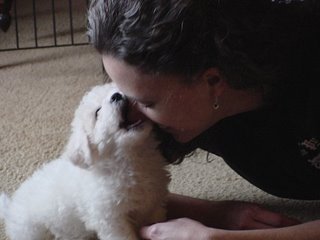
My sister's family got a Bichon Frise puppy for Christmas. A white powder puff of a dog.


Vicious puppy attacks shoelaces.


My sister and her new baby.

-----

For you garden enthusiasts, that's my Mom's really nice St. Augustine grass in the background of the outdoor pics.

Rio Grande River


This is photos of the Rio Grande River as we saw it from the walk we took along the river. The first one shows the bridge we walked out on shown in the next post down or the previous post. The brush was really thick along the banks of the river so we could only get to the edge in a couple of places.


Friday, March 6, 2009

Skis and more skis.....

A ski for every need. These are the keepers to date. A couple not in the picture and fewmoreto add to the quiver yet. And a few skisto be retired once that happens. I'm obviously partial to lwt skis with a BC leaning. But by no means am I only interested in ski mountaineering and "edgedalpinism". I like being lifted served as well as I do having the ability to easily travel any where in the mountains.So you will see some extremes in my favorites. Eventually everything pictured and listed will get a full review. But if it is pictured or listed here...I think the performance within its genre is any where from above average to simply spectacular by comparison.


Current quiver list:


Dynafit Broad Peak 167cm x74mm

*Dynafit Nanga Parbat171cm x 80mm (not shown)

La Sportiva GTR 168cm x 82mm

*Dynafit Cho Oyu 174cm x 88mm (not shown)

La Sportiva Lo5 178cm x 95mm

*DPS 99 Pure 178 x 99mm (not shown)

Dynafit Huascara 177cm x 112mm

La Sportiva Hang5 178cm x 117mm

*Praxis GPO 182x 116mm (not shown)

DPS 112 RPC 192cm x 115mm

Dynafit Huascaran 196cm x 115mm

*Praxis Protest 187cm x 128mm (not shown)

*DPS 138 Pure 192cmx 138mm (not shown)


Boots? If your feet hurt skiing isn't all that much fun. All these boots fit mewell. But some better than others to be sure.


ScarpaMaestrale RS

Dynafit One

Dynafit TLT 5 Performance

Dynafi TLT 5Mountian

*Scarpa Alien 1.0 (not shown)

*Dynafit DyNA PDG (not shown)


Bindings? From my perspective..the lighter the better on any tech bindings.

Dynafit, Plum and Trab mountedon my skis. B&D top platesas well.(only Plum is not pictued here)


It has taken me 3 years to sort through my skiing gear and come up with "everything" I wanted. And three years to try and then reject a bunch of gear I didn't like for what ever reason. More to come as to thewhy and the why not.

Monday, March 2, 2009

Thanks, Miriam!

Sunday, September 19th - - It was a delightful day that was spent with one of my favs – Miriam Midkiff of Ancestories :: The Stories of my Ancestors. Miriam has already written about our day but I just wanted to add that it was my pleasure to be able to spend some time with her - to get to know her a little better and to meet her son and husband. Her son, being a teenager, didn't have much to say but her husband and I had several engaging conversations while Miriam was off doing something else. The pot roast was delicious. It was very nice to have a home-cooked meal for a change!

Miriam Robbins Midkiff and Becky Wiseman. Photo taken September 19, .. by her husband.
Even though I knew that Miriam and I probably wouldn't get together until Sunday, I arrived in Spokane about mid-day Friday. I had decided that this would be a good opportunity to have a couple of “down” days. I had to tend to some errands – get the oil changed in the van, laundry, grocery shopping – you know, things that “normal” people do on a regular basis ;-)

I also took advantage of having electricity at the RV park to work on the photos from August on the netbook. I don't normally stay at commercial RV parks (or resorts, as this one was called) because they usually resemble parking lots. But for some reason the state of Washington closed the campgrounds in some of its State Parks in mid-September so I had no alternative. This particular RV resort was actually kind of nice. There were some trees and bushes in between each parking space, which provided some degree of privacy. A rarity in an RV park! They also had wifi available but I kept getting kicked off the network after about 15 minutes online. Luckily there was a McDonalds across the street...and their wifi worked great.

My stop-over in Spokane was a nice break in my journey. Several tasks were accomplished and I got to spend some time with a friend. Thank you, Miriam! And I look forward to our next visit, someday!

Bonita

My quarter horse mare, Bonita decided to have a running play day. Here are some photos of her.