Sunday, December 23, 2012

Best Wishes...

The past few days I've been a bit under the weather... until I get back, please check out the posts my fellow genea-bloggers have contributed to the Advent Calendar of Christmas Memories that has been hosted by Thomas MacEntee. I know that it has been a lot of work for you Thomas, but the time you spent putting it all together has been appreciated. Thank you Thomas! I have certainly enjoyed reading all of the articles. Thank you to everyone who participated.

Advent Calendar of Christmas Memories

To each and everyone, I wish you the best Christmas ever and may the spirit of the season be with you.

If you are in need of a good laugh (and aren't we all at some point during the holidays?) Janice Brown's video cartoons of GeneaBlogging Elves Running Amok will certainly cheer you up!

Thursday, December 20, 2012

Owl


A big hoot owl and to the side is a bird.

Rock Holes


There are holes and cracks all through all of the big rocks found in the Jemez. For years I have been looking in all that I could see into or get to hoping against hope to find a sack of gold or some other treasure hiden there many years before by an outlaw, or Spanish conquestador, or American Native or even an inquestive squirrel that might have picked up a lost arrowhead, or piece of jewelery. So far I have only found a few rotten pine nuts. I really don't expect to find anything but who knows. Several of the rocks we explored on this trimp had lots of small holes, many of which we couldn't get up to where they were.

Pitsford Water clockwise


With Marta. Very cold wind again, but dry and occasionally almost bright. Just under 7 miles.


We hit a cracking pace during the first part in order to keep warm. All the same we found a spot that was sheltered enough for a 20 minute coffee break. The trick is to avoid the exposed wooden seats, and go to ground level behind hedges or woodland. Those lightweight mats are worth their weight in - coffee.


We saw plenty of birds today - Canada geese, coots, tufted ducks, mallards, great crested grebe, swans, pink-footed geese, a kestrel, possibly a fieldfare.


This was the snowiest part of the walk - most of the path was clear


silhouette


Tufted ducks


This looks a strange landing posture


Just brrr!


Not many pics - too busy walking fast to keep warm.


Wednesday, December 19, 2012

Flower walking again


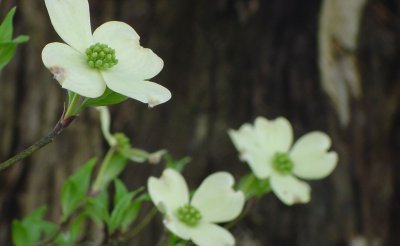
Dogwood. In the south, a tree traditionally connected with Easter - but since Easter was so early this year, it wasn't blooming then.


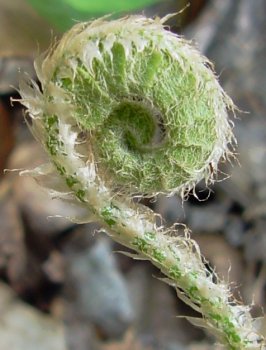
You fiddlehead! Fern unfurling.


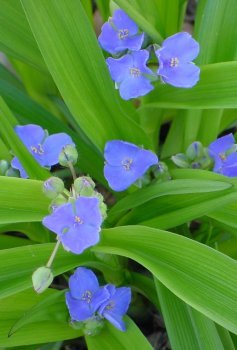
Spiderwort. I've read that the stamens are very sensitive to radiation - they turn from blue/purple to pink.


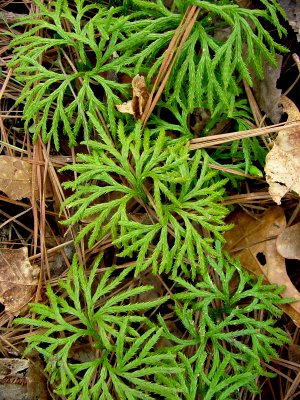
Ground Cedar. A type of club moss. I transplanted this onto our property last week. I tried to match its original environment, but chances are not good that it will live - it's notoriously picky. But since it's from a wildflower rescue (dug where a subdivision is going up), it doesn't hurt to try. If you are local and want information about the Blount County (Alabama) wildflower society, email me: blog (at) naturalimpulse (dot) com.


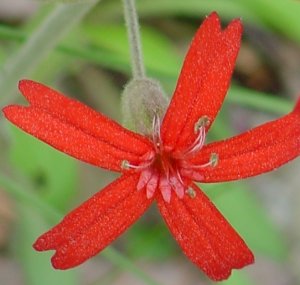
Fire Pink. Speckled with pollen. It's called a "pink" because of the pinked edges of the flowers (as though they were cut with pinking shears).


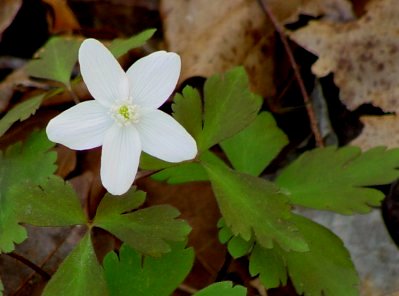
Wood anemone.


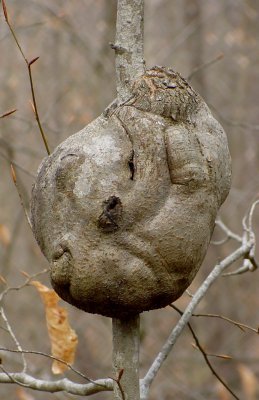
The gall! This reminds me of "The Elephant Man".

I'm in a bit of a hurry today, so will have to come back and edit later with the latin names.

Thoughts on Lugs, Then and Now

Lugset Pre-Bike

Those who love lugged steel bicycles arrive to that preference in one of several ways. Often they grew up with lugged steel. The look or concept of it either holds sentimental value or represents quality. Perhaps their dream bike - the one they'd see in the bike shop window every day on their way home from school- had distinct lugwork. Or else lugs are incorporated into a "they don't make'm like they used to" narrative. On the other hand, a person entirely new to bicycles might simply decide they like lugs - either for aesthetic reasons or perceived functional ones.


With me it was definitely the latter. I was born in 1979. The bikes of my youth looked like this. And as far as shop windows... Well, come to think of it, I don't even remember any bike shops around when I was growing up; bikes came from department stores.


I am trying to remember how I even learned what lugs were. I certainly did not know about them when I first got into cycling as an adult. Neither did I have an ingrained preference as far as frame material. Before I bought my first grownup bike, I rode a rentedaluminum hybridin Austria - which, frankly, I thought looked kind of nice. But it rode a little harshly, and when I mentioned this to the man at the rental place he advised that I buy steel - giving me a long, expert-sounding lecture about the benefits of steel over aluminum. This was among the things that sent me in that direction.


Fast forward a bit, and I remember standing at the Belmont Wheelworks bike shop, looking at a collection of hand-cut Peter Mooney lugs through the glass counterpane. Peter Mooney was the first custom framebuilder whose bicycles I saw in person, as well as the first builder whom I would meet face to face. I knew that the filigreed objects he made were those sleeve things I'd seen on some bicycles' joints. "Those are beautiful," I said. "Yeah, Peter makes his own lugs," replied the person at the counter. And I think that's how I learned what they were called.


So I went home and looked it up online. Until that point, the artist in me thought the sleeve things looked beautiful, but I had assumed they were entirely decorative - much like embellishments on furniture and porch railings. Now reading about them, I understood that they served as frame joints and were inherent to the frame's construction. I also found many articles and posts expressing the opinion that this lugged construction was "better" (stronger, more receptive to repair, requiring more skillful execution) than other kinds. This was even before I stumbled upon Rivendell(although it set the stage for Rivendell's appeal); this was coming from individual framebuilders and from vintage bike collectors, of whom I soon came to know a few personally. The argument seemed logical enough: Modern bikes, like everything else that's made now, were fragile and disposable. The traditional method was meant to last.And what made me particularly receptive to this argument was visiting bike shops and trying the different city bikes that were available at the time. The bikes that felt uncomfortable or seemed poorly made, happened to be welded.


This is all simplified of course. But it's not an inaccurate summary of how my preference for lugged steel came about. It wasn't a perspective I brought with me to the blog. But it developedpretty quickly within the first year of it.


Interestingly enough, the first stages of its unraveling had to do with aesthetics. I liked looking at bikes and spent a lot of time doing it, studying frames from different eras and different builders. I also live in an area where handbuilt lugged steel bikes are plentiful, which gave me in-person access to a lot of the custom work. One thing I began to notice, was that lugs and their various relations (fork crowns, reinforcer plates, dropout sockets, and the like) gave bicycle frames a certain aesthetic uniformity. Most framebuilders do not make their own lugs but purchase pre-fabricated sets, and there aren't many of those to choose from. And while some builders modify existing lugs to the point that the originals are not recognisable, most do not. Because of its visual distinctness, lugwork has a strong influence over a bicycle frame's aesthetic. And the more frames I looked at, the more I started to feel that the same generic details were dominating many framebuilds' work. I began to question what it was that I was actually appreciating: the creativity, the craftsmanship, or the pleasing shape of a $1 reinforcer plate? With fillet brazed and TIG welded frames I may not have cared for the look of the joints, but had to admit that the work seemed less constricted by pre-fabricated parts.


Around the same time that my thoughts started to flow in this direction, I began to encounter an increasing number of modern, well-made bikes that were not lugged and, in some cases, not steel. Demoingthe aluminum Urbana bike had a big effect on me. This excellent machine was nothing like the half-heartedly made bikes I'd grown weary of seeing in bike shops, despite using similar construction methods.The same could be said of the Paper BikeandPilenI tried soon thereafter, not to mention custom welded bikes by ANT, Geekhouse and Seven. The association I'd formed between construction methods and quality had been erroneous. The flimsy bikes I disliked were such because they were made and assembled poorly, not because they were welded.I still preferred the look of lugs, particularly unique lugs. But my appreciation for the other methods of frame construction grew.


The growth continued as I developed closer relationships with a handful of local builders and began to better understand their methods. With this, my sense of aesthetics shifted. When looking at a bicycle frame's joint, I now see it as an embodiment of the work and creativity that making it involved, of the opportunities and limitations that were created by the chosen method of construction. This does not so much overshadow the look, as it gives meaning to the look. And meaning informs our subjective judgments of beauty.


Having now tried my own hand at building a bicycle frame, my thoughts on lugs have gone through yet another iteration. When asked what I think of them, what comes to mind is that I appreciate them making brazing easier. I don't appreciate how time consuming they are to work with and the limitations they place on frame geometry. That reasoning is entirely devoid of aesthetic sentiment, which worries me a bit. I don't want to stop "seeing." And I don't think that I will; more likely I am just a little tired now, and still overwhelmed from having gone through the process so intensely and quickly.


I remember how, after welding two bits of steel together myself, I tried to pry them apart a couple of minutes later. The strength of the connection took me by surprise. It felt like fusion (which, of course, it was), whereas a similar joint, when brazed, felt more like it held together with very strong glue. This doesn't necessarily mean anything, I know. But I would like to learn more, and I would like to learn it firsthand.


Indifferent is a negative word, so I would not say I am now indifferent to lugs.I like lugs, particularly unique ones.One of my crazy dreams is to design and cast a lugset of my own some day. Until then... I sort of like it all, lugs included.

Saturday, December 15, 2012

Test Riding the Breezer Uptown 8

Breezer Uptown 8Since the start of this blog, I've received more requests to review the Breezer Uptown than any other city bike on the market. I have not done so earlier for two reasons. First, availability: Until now, I had not seen the Breezer for sale in any local bike shop. After a break of several years Harris Cyclery now carries them again, which is how I came across this one. But additionally, I was reluctant to review a bike that I was unenthusiastic about: theBreezerhas never appealed to me, and I have no interest in it other than general industry curiosity. However, I would have said the same about Seven Cycles a year ago, and trying one of those (in response to readers' requests as well) had a profound effect on me as a cyclist. I also unexpectedly liked the Urbana, which I tried for no reason other than the manufacturer's urging. In short, you never know and it's good to keep an open mind. That is how I approached my test ride of the Breezer Uptown.

Breezer Uptown 8The Uptown is Breezer's fully equipped commuter model, available in 3-speed and 8-speed variants. The bike includes fenders, a chainguard, a rear rack, a kickstand, an integrated rear wheel lock, and front and rear dynamo lighting.

Breezer Uptown 8The welded aluminum U-frame has "unitube" construction.Steel unicrown fork. The 26" wheels are fitted with 1.5" wide tires.I tried the 17" sized frame. There are other sizes and also a diamond frame version.Please seeherefor full specs.

Breezer Uptown 8The colour is a deep, sparkly forest green, with contrasting silver panels on the chainstays, near the bottom bracket,and on the fork. The two-tone paint job gives the bike a sporty look that strikes me as being at odds with its purpose as a commuter. But the dominant green colour is pleasant.

Breezer Uptown 8As far as functionality, it must be said that this bike is excellently equipped for commuting. Front and rear dynamo lighting seems to be of good quality and is internally routed, exiting through the rear fender for the tail light.

Breezer Uptown 8The rear rack's tubing will accommodate a variety of pannier systems.

Breezer Uptown 8The tires are wide. The fenders provide full coverage and include small plastic mudflaps.

Breezer Uptown 8There are braze-ons for the shifter and brake cables, so that nothing is hanging loose, and there are waterbottle bosses.

Breezer Uptown 8The wide range Shimano8-speed hub could be attractive for hilly areas. The shape of the handlebars provides a sufficient gripping area despite the twist shifter.

Breezer Uptown 8The handlebars are mildly swept back. The brake levers are comfortably placed, and the front and rear v-brakes provide strong stopping power.

Breezer Uptown 8All of these features, for a retail price of $980 (or $720 for the 3-speed model), make the Breezer Uptown look undeniably good "on paper." This is the kind of commuter bike you are likely to find in a mainstream European bike shop today - modern, affordable, fairly lightweight, designed to be ridden in everyday clothing, and fully equipped - and it's great to see the same available in the US.

Breezer Uptown 8Having said that, I did not like this bike on a number of levels. From an aesthetic and emotional standpoint, I found the Breezer to be "unlovable." The huge welds, the hollow feel of the aluminum tubing, the athletically-inspired colour scheme - it all feels so generic and impersonal. I like a bicycle with some warmth to it, with some evidence of a human touch, and I just don't feel any sense of this from the Breezer. It's not just about lugged vs welded and steel vs aluminum, but about the very essence of how the bike feels to look at, to touch and to ride. This is truly the vacuum cleaner of bicycles - and while for some that's a good thing, for me it's uninspiring.

Breezer Uptown 8But more importantly - and more disappointingly - the Breezer's ride quality did not work for me. I rode it for about 3 miles and already felt the sort of strain in my knees that I've experienced on bikes with the infamous "comfort" geometry. This could also be because I would consistently end up in a gear that was too high: I found that being in too high of a gear was the only way I could make the bicycle go at the speed I wanted. In a gear where my cadence felt appropriate, the bike would not move fast enough for my liking.

Additionally, something about the relationship between the seat tube angle and bottom bracket felt "off," and after examining the frame geometry online I still do not know what. Subjectively, it felt as if the seat tube angle was extremely steep - almost a straight drop from the saddle down to the pedals - which contributed to the knee discomfort, but, oddly, failed to add to pedaling efficiency. According to the frame specs, the seat tube angle is actually 72 degrees, which is entirely normal for a city bike. I do not know how to explain my subjective sensation of steepness in light of this.

Aside from these issues, I thought the bike felt rather harsh going over bumps and potholes. Not horrible, but definitely not great. Even on smooth terrain, I felt road buzz through the handlebars, which became painful for my (overly sensitive) hands fairly quickly. Maybe wider tires or a suspension fork would help here.

Breezer Uptown 8On a positive note, I thought the BreezerUptown was solidly put together and truly functional, unlike other bikes that only play at being fully-equipped commuters. It was also stable and well-balanced, and there was no toe overlap on the 17" frame. This bike should be easy to handle for a novice transportation cyclist.

When it comes to impressions of ride quality, everyone is different, and I urge you to take that into account when reading my earlier feedback. I know there are people who love this bike and commute on it daily, so obviously it is possible. The manufacturer's history is also quite interesting (lugged mountain bikes!), and worth looking into. Would I buy a Breezer Uptown for myself? No. But if the ride quality works for you and you find the bike attractive, I agree with those who call it a good value.

Friday, December 14, 2012

Moving On :: Leaving Alaska

Saturday, August 28th - - My stay in Juneau was at an end. The ferry didn't leave until 3 pm but, since I had a vehicle, I had to check in by one o'clock. There would have been time to take another tour I suppose, but after yesterday's adventure I really didn't see much point in it – I don't think anything could have topped it. For the first time in a long time sleep didn't come easily last night. My mind wouldn't let go of the excitement of the day and I kept reliving the events over and over.

But even with lingering in bed a little longer there was plenty of time to get around in the morning and to run a few errands (stock up on groceries and a few other items and fill up the gas tank). I then found a turnout along the highway and whiled away the remaining bit of time by doing absolutely nothing – sittin' and thinkin' and watchin' the clouds go by... (and more of the same once I got in the queue for the ferry!)

The ferry ride was mostly uneventful, the hours passed by quickly. However, at about five o'clock someone yelled out “Whale on the left.” Fortunately, that just happened to be the side where I was sitting... it was rather far off and moving away from us but we watched that lone humpback whale breach (jump out of the water) five times! It was yet another of those “WOW” moments, for that is all that it lasted, just a few brief moments, but it was a wondrous sight to see.

Clouds filled the sky as we got close to Haines. We docked at 7:30 and then there was a stopover of an hour to let people and vehicles disembark, then it was another hour to Skagway.

Pulling into the ferry dock at Skagway at 9:30 pm. It was interesting to me that the Captain used two spotlights, one on either side of the ferry, to guide it into the docking area. A few minutes later I drove off and into Skagway. For some reason, it surprised me that it was dark already when I got there. And it was warm. Not hot, but much warmer than it had been for many weeks. There were two RV Park[ing lot]s in Skagway but I had noticed some RVs pulling into the ferry terminal parking lot and decided to join them there for the night. If you think about it - with its lighted lot and security patrols - it was as safe (if not safer) as any campground.

=========

Sunday, August 29th - - It was raining lightly when I left the ferry terminal parking lot at eight o'clock. I drove down several streets in the nearly vacant town. Few people were out and about and stores were not yet open. There were, however, three cruise ships in the harbor that had pulled in during the night, filled with people about to fill the town.

Ready to move on, I found the main highway and drove north out of town. Less than an hour later I was out of Alaska and back in Canada. A part of me wanted to return to Alaska to do some of the things that I hadn't done (because of time, money, or the weather – or a combination of all three) but deep down I knew it was time to leave. Perhaps one day I will return. But if I don't, that's okay because I've been there and had some amazing and wonderful experiences that will be with me for a long time to come.

The South Klondike Highway heads north out of Skagway following the Klondike River. On the other side of the river was the White Pass & Yukon Route railway, which was one of the last narrow-gauge railroads built in North America. Began in May 1898, more than 2,000 workers labored with hand tools for 18 months to build the railroad. It claimed 35 lives. The highway that I was driving on was only 30 years old (began in 1978 and dedicated in 1981) and certainly wasn't constructed with hand tools!

A portion of the White Pass & Yukon Route railroad, with train, no less!
The train passing over Pitchfork Falls.
The unusual William Moore suspension bridge spans a 110-foot-wide gorge over Moore Creek, which is 180 feet below.

Natures Rock Garden.
Just north of the U.S. Border is an area referred to as the moonscape.
The trees are small and shaped by the wind and snow.
If I hadn't missed the turnoff to Carcross Road I would not have seen beautiful Emerald Lake (also known as Rainbow Lake).

The long and winding road, typical of the Carcross Highway, which goes from the town of Carcross to Watson Lake. The town was originally named Caribou Cross because herds of caribou used to cross there. I guess it is fitting that cars cross through Carcross now.
The first time (on August 3rd) I passed through Watson Lake, home of the Sign Post Forest, crowds (well, maybe not crowds, but more than a few people) filled the streets. Today, I saw two people. You can tell it is getting close to the end of the summer and the end of the tourist season. The streets, and campgrounds in Yukon Territory, are nearly empty.

Thursday, December 13, 2012

Evening at Esther Lake


Last Sunday night we went for a drive to a local lake to check on a tip that I had gotten about a Loon nest. We did not find the nest, but we did see the Loons out in the lake. We were also treated to a beautiful sky over Esther Lake. I thought the sunset was going to be spectacular but by the time the sun went down the clouds had moved in too far and the sky was completely gray. Oh well! The pre-sunset show was just as nice :-)


Tuesday, December 11, 2012

Fossil week, day 2


This one is one of my favorites - a pith cast of Calamites, the ancient horsetail tree. (Compare to images here and here.)

Like the fossils from yesterday, it's about 300 million years old.

Most of north central Alabama's fossils are from this Carboniferous period. (Map.) Here is a nice color-coded map for the whole US. (You can see part of Canada as well, although as usual it's shaded darker, as if nobody ever goes up there.)

My bad mistake with this fossil was not noting where I found it. But I believe it was either at my in-laws' old lake house (Smith Lake, Winston county) or at one of our old birdwatching spots (Jefferson county).

Saturday, December 8, 2012

Mating Damselflies, Swamp River


I paddled 13 miles on Swamp River yesterday and saw several critters but the highlight of the day was seeing all of the damselflies in the grasses and on the lily pads along the edge of the river. They are so small, most people probably wouldn’t even notice them. These little guys are only about an inch and a half long. Once you notice them, it’s hard to take your eyes off them (they are also quite hard to photograph, since they usually don’t sit still for very long). Adding to the difficulty was the wind. It was quite hard to capture these critters when the grasses were blowing around so much!

Tuesday, December 4, 2012

Double the Pleasure, Times Two

Easter Sunday I had the pleasure of meeting, in person, a gentleman whom I have admired from a distance for over three years. I first met Stephen Danko via his blog in late .. and then when we learned that we had the same personality type a few months later, we both thought it would be neat to meet each other sometime. It's hard to believe that we finally have! Thanks to Kathryn Doyle (whom I had met last August) and her husband, we had a delicious Easter dinner and a wonderful afternoon talking and discussing all manner of things. Thank you, Steve and Kathryn for a most pleasant time!

Kathryn Doyle, Stephen Danko and Becky Wiseman. April 4, ...

The weather on Easter Sunday was miserable. It was chilly and rainy with occasional torrential downpours. I was so glad that it was Steve that drove to meet us! I was even more pleased on Monday morning when I awoke to sunshine. It made the drive to Stockton to pick up Sheri Fenley (The Educated Genealogist) much nicer. After a big hug from Sheri, we drove on to Sacramento to have lunch with Craig Manson (Geneablogie), another of the early geneabloggers whom I've wanted to meet, like forever. (Craig has been blogging his genealogy since September ..!! and I found him in the fall of ...) There was no awkwardness in meeting, it was as though we had all known each other for a long time, and in essence we have. But there is nothing quite like meeting for the first time someone you have “known” online. I really didn't want our time together to end, it was so much fun! Thank you, Sheri and Craig, for an incredibly pleasant day.

Craig Manson and Becky Wiseman. April 5, ...

Becky Wiseman and Sheri Fenley, slightly out of focus but happy! April 5, ...

Craig has written his impressions of our get-together, as has Sheri (who also has more photos).

For some more fun, check out Randy's post for another recent GeneaBlogger Meetup in Australia! Cool, Randy!

Sunday, December 2, 2012

Getting schooled in Chamonix.

Intitial gully of the Burnier-Vogler, N. Face of the Midi, yesterday.


A year ago while climbing in the Rockies, myclimbing partnerasked, "Where would you go to learn "alpine climbing"?


My quick answer was Chamonix. Every good alpine climber that I have admired over the years has spent some time here. And I have always thought that what they learned here was a major influence on their climbing careers.


I've been here 12 days. In that time we've had 40cm of snow, in two dumps. And as much as I know alpine climbing is all about conditions, I've generally ignored that and climbed anyway. Wallowing in cold dry snow has followed. While wearing all the clothes I own. A few interesting lessons for me already.


No Neve to be found here :) There was however lots of waist deep snow being shed off thehard, dryice.


It could be worse. But at the moment this has been the onlyresult of being slow on route. Bivy in the WC on the Midi station. Breakfast and a coffee in town followed after the first lift down the next morning. If nothing else climbing in Chamonix is sureal.


Tuesday, November 27, 2012

The Power Nap..a cautionary tale


A couple of years ago in early winter we walked into a local peak, climbed it and walked back out. With the nap I took walking out Iwas just over 24 hrs c2c. My partner a few hrs less.


Nothing exceptional for time. A bit of the climbing was spectacular. The walk? It was long enough. Longer than I wanted it to be. Shorter than it can be.


But this story has nothing to do with climbing or walks. It is all about the Power Nap.


I love a good nap when I amtired or better yet when I am tired and warm. Preferably with the sun shining on me in a protected, comfortable and safe place.


The power nap I spoke about above has a few of the elements. I was tired. Protected? Not so much I just laid down on my pack off to the side of the trail and let the cold wake me up.


Here is the rest of that story and the end result.


http://coldthistle.blogspot.com//11/immersion-foot.html


Seems reasonable. Wet and cold feet pounded in a few hrs of hard walking in, on and out.


So then I decided to take another power nap. This time at 12K feet in the sun and it was AWESOME! It felt amazingly great. I was warm and cozy and comfortable out of the wind and soaking in the last bit of sunshine I knew would be the last I would see for awhile. My feet weren't wet or cold this time. Dry and warm as matter of fact. The one thing that both naps did have in common was tightly laced single boots that I couldn't be bothered to unlace for a nap. Dumb! Really dumb in retrospect.


A great place for a power nap!


So?? The result of my second power nap? Pretty much the same result as from my 1st power nap with wet and cold feet a couple of years previous...fooked up feet.


After both of these "power naps" I ended up walking for another hr or so each time after I woke up. My feet felt a little weird but never thought they had been damaged. More like they had fallen asleep a bit, not fully numb,but woke up with the additional milage. Both times the resulting nerve damage came as a surprise a few days later.


Now before you pass me off as a nut case...,OK, may be that already has happened. But in my defense I have spent a few nights out up high in the middleof the Canadian/Cascade winter and early spring in Alaska at much colder tempswith little or no gear and not fooked up my feet. The difference you ask? Well I generally spent the majority of time on those trips bouncing around trying to keep warm. I didn't lay down and take a power nap. I was more worried about getting back to some place warm enough so I could take good nap and be sure to wake up again.


The lesson? It might be obvious by nowfor any rational person ;-). If you are prone to taking power naps, mid trip, take the time to unlace your boots early on. You'll likely be happy you did.